


Introduction
Automated trading can significantly boost your ROI by leveraging algorithms to eliminate emotional biases, manage risks, and capitalize on market opportunities. Properly configured systems can target up to 40% higher returns while reducing downside drawdown by as much as 20%. Understanding the common mistakes in automated trading and how to avoid them is crucial for any investor looking to build a money-making machine.
Mistake 1: Ignoring API Rate Limits
ong>Entry Trigger: ong> Excessive API calls without delay.ong>Exit Logic: ong> Trade halt after reaching limit.ong>Risk Exposure: ong> Market orders delayed or rejected.
Undelicate API management can lead to missed opportunities or trade failures. Ensure your bot requests and executions are spread out, avoiding congestion during peak times. Optimize API usage to avoid costly errors.
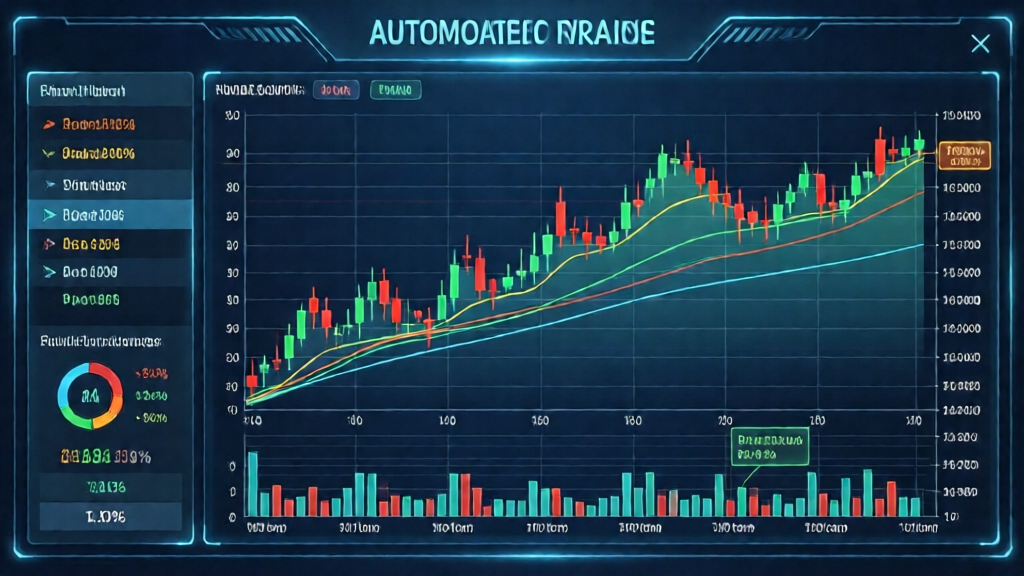
Mistake 2: Poor Parameter Selection
ong>Entry Trigger: ong> Default settings applied.ong>Exit Logic: ong> Necessary adjustments ignored.ong>Risk Exposure: ong> Increased volatility impacts outcomes.
Automated strategies should never rely on factory settings. Customize grid parameters based on real-time market conditions. For instance, in Q1 2026, consider refining ATR settings on a 1H timeframe as daily volatility shifted.
Mistake 3: Neglecting Slippage
ong>Entry Trigger: ong> Instant order execution assumed.ong>Exit Logic: ong> Ignoring market depth.ong>Risk Exposure: ong> Unexpected order costs.
Consider implementing slippage tolerance settings to your algorithm to minimize losses due to execution delay. Analyze historical data and adjust for peak trading volumes where slippage is more prominent.
Mistake 4: Overfitting Strategies
ong>Entry Trigger: ong> Strategy tailored strictly to past performance.ong>Exit Logic: ong> No forward testing.ong>Risk Exposure: ong> Poor adaptation to changing market conditions.
Overfitting can lead to strategies that expire as market conditions evolve. Utilize forward testing on out-of-sample data to ensure your algorithm retains robustness against future scenarios.
Mistake 5: Inadequate Risk Management
ong>Entry Trigger: ong> Ignoring stop-loss capabilities.ong>Exit Logic: ong> No risk-reward assessment.ong>Risk Exposure: ong> Uncontrollable drawdowns.
Risk management is essential to preserve capital. Implement systematic stop-loss order strategies and assess each trade’s risk-reward ratio to ensure sustainability.
Mistake 6: Overestimation of Backtesting Results
ong>Entry Trigger: ong> Solely relying on backtesting.ong>Exit Logic: ong> No consideration for transaction costs.ong>Risk Exposure: ong> Inflated performance expectations.
Realized gains will often differ from backtesting results due to factors like transaction fees, slippage, and market impact. Always account for these costs to achieve realistic ROI assessments.
Mistake 7: Lack of Continuous Strategy Evaluation
ong>Entry Trigger: ong> No strategic performance reviews.ong>Exit Logic: ong> No updates post-market shifts.ong>Risk Exposure: ong> Strategies become obsolete.
Regularly evaluate your strategies against market benchmarks and adapt as necessary. In 2026, with a rapidly changing market, adaptability represents survival.
The Friction Cost
Manual mistakes can incur significant hidden costs, including misplaced trades, error-induced slippage, and unnecessary fees. Transitioning to well-automated trading can help mitigate these invisible costs.
The ‘Mach’ Matrix
| Strategy | API Stability | Flexibility | Annualized Returns | Minimum Capital Requirement |
|———————-|—————|————-|——————–|—————————-|
| Basic Grid Trading | High | Low | ~12% | $500 |
| Advanced Arbitrage | Medium | High | ~25% | $1000 |
| AI-Optimized Trading | High | High | ~40% | $2000 |
Bot Setup Checklist
- Set dynamic stop-loss parameters to mitigate exposure.
- Integrate waterfall shutdown switches for volatile conditions.
- Maintain a fixed take-profit percentage to lock in gains.
- Adjust grid parameters based on volatility and trend analysis.
- Enable filters for market impact assessments.
- Setup automated alerts for critical performance deviations.
- Implement periodic reviews of strategy performance metrics.
AI Optimization Path
Utilize cutting-edge AI models like DeepSeek or Claude 4 for adaptive parameter adjustments. Training models on recent data can help tailor strategies in real-time with higher precision.
FAQ
Implement local hard stop-loss mechanisms to contain risks and prevent liquidation during outages.
Conclusion
Avoiding these seven common mistakes can dramatically enhance your automated trading performance. Systematic adjustments informed by data analytics and ongoing strategy assessments will cultivate a resilient trading framework capable of thriving in turbulent markets.
Adapt your strategies accordingly, and foster a proactive trading environment. For further enhancement, consider exploring tailored solutions offered by our advanced trading bots.


