Introduction
With an estimated $4.1 billion lost to DeFi hacks in 2024 alone, understanding crypto technical analysis is more crucial than ever for beginners looking to enter the cryptocurrency market. This article aims to equip you with the fundamental concepts of technical analysis, enabling you to make informed trading decisions.
What is Technical Analysis?
Technical analysis involves examining historical price data and market trends to forecast future price movements. It differs from fundamental analysis, which looks at a project’s technology, team, and market potential. When applying technical analysis, traders primarily focus on charts and indicators.
Why Use Technical Analysis?
- It helps identify potential price movements and trading opportunities.
- Maximize profits by providing clear entry and exit points.
- Equip traders with behavioral insights of market participants.
Core Concepts of Technical Analysis
1. Price Action
Price action is the movement of an asset’s price over time. Understanding price action helps traders anticipate market directions based on historical performance.
2. Support and Resistance Levels
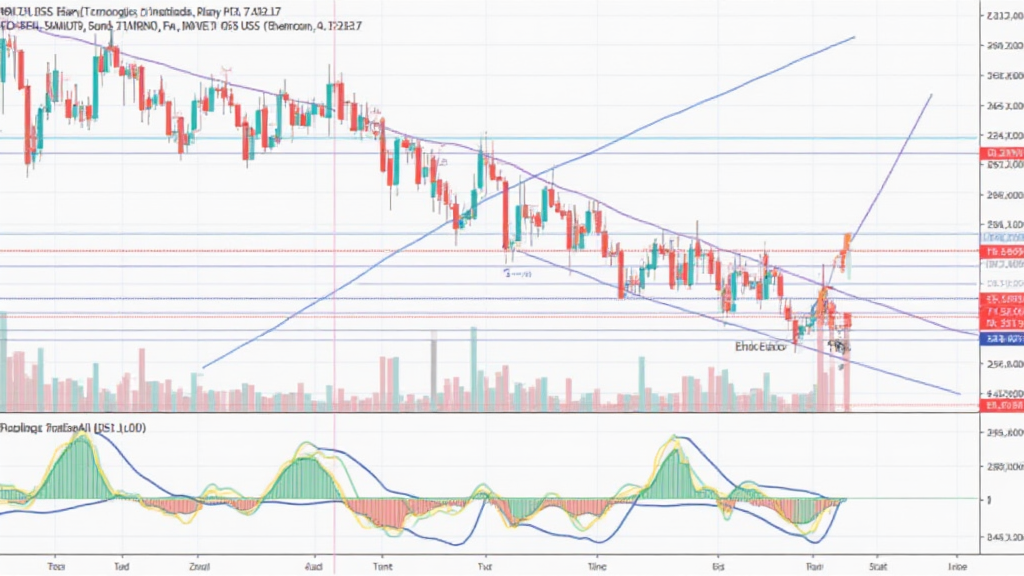
Support is where buying interest is strong enough to overcome selling pressures, while resistance is where selling pressure overcomes buying interest. Recognizing these levels aids in predicting reversals and breakouts.
3. Trend Lines
Trend lines help visualize the direction of a market and identify patterns. A rising trend line indicates upward momentum, while a falling trend line indicates downward momentum.
Common Technical Indicators
1. Moving Averages
- Simple Moving Average (SMA): An average of prices over a specific period.
- Exponential Moving Average (EMA): Gives more weight to recent prices, making it more responsive to current price changes.
2. Relative Strength Index (RSI)
The RSI measures the speed and change of price movements on a scale from 0 to 100, helping traders identify overbought or oversold conditions.
3. Bollinger Bands
Bollinger Bands consist of a central moving average, with upper and lower bands indicating volatility. A price touching the upper band may suggest overbought conditions, while the lower band suggests oversold conditions.
Integrating Fundamental Analysis
While technical analysis focuses on price charts, integrating fundamental analysis provides a broader perspective. For instance, understanding a cryptocurrency’s project, its team, or news affecting its market can enhance your trading strategy.
Practical Tools for Technical Analysis
- Trading View: A popular charting platform that allows traders to perform technical analysis.
- CoinMarketCap: Provides essential market data on cryptocurrencies.
- Ledger Nano X: A hardware wallet ensuring your assets are secure against hacks.
Conclusion
Starting your journey in crypto trading can be intimidating. However, with a solid foundation in crypto technical analysis for beginners and ongoing market education, you can navigate the cryptocurrency landscape with confidence. Remember, trading isn’t just about analyzing charts but about understanding market psychology and combining various strategies to craft your unique approach.
At coinmachinvestment, we provide resources and insights for both new and experienced traders seeking to maximize their potential in the crypto market.